StockScore
Score the business. Read the market.
StockScore does both. A 100-point score for quality, value and moat, and a score-free read on the sentiment, IPOs and events around it. Search any company or ETF; every card is live data.
One score, fully shown
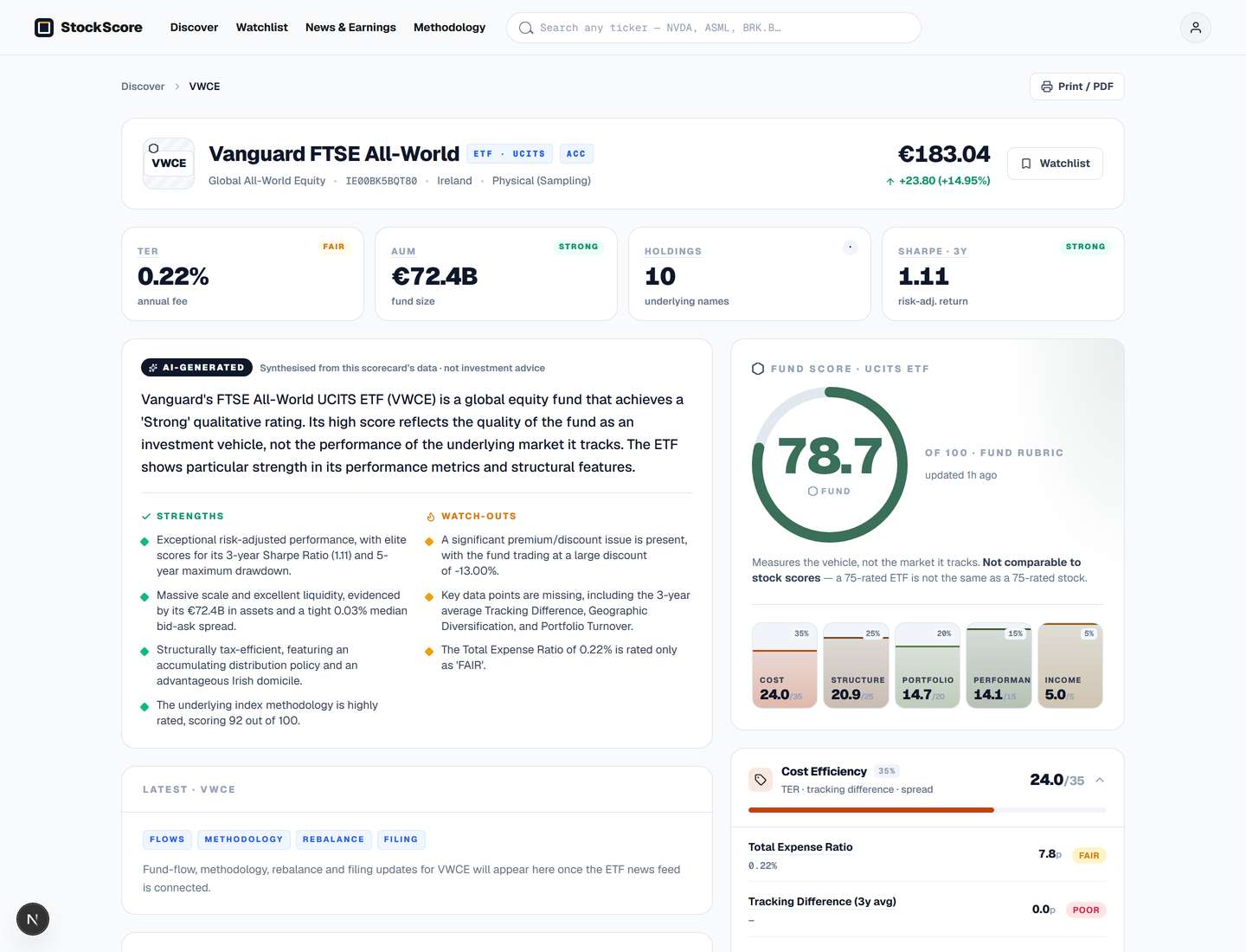
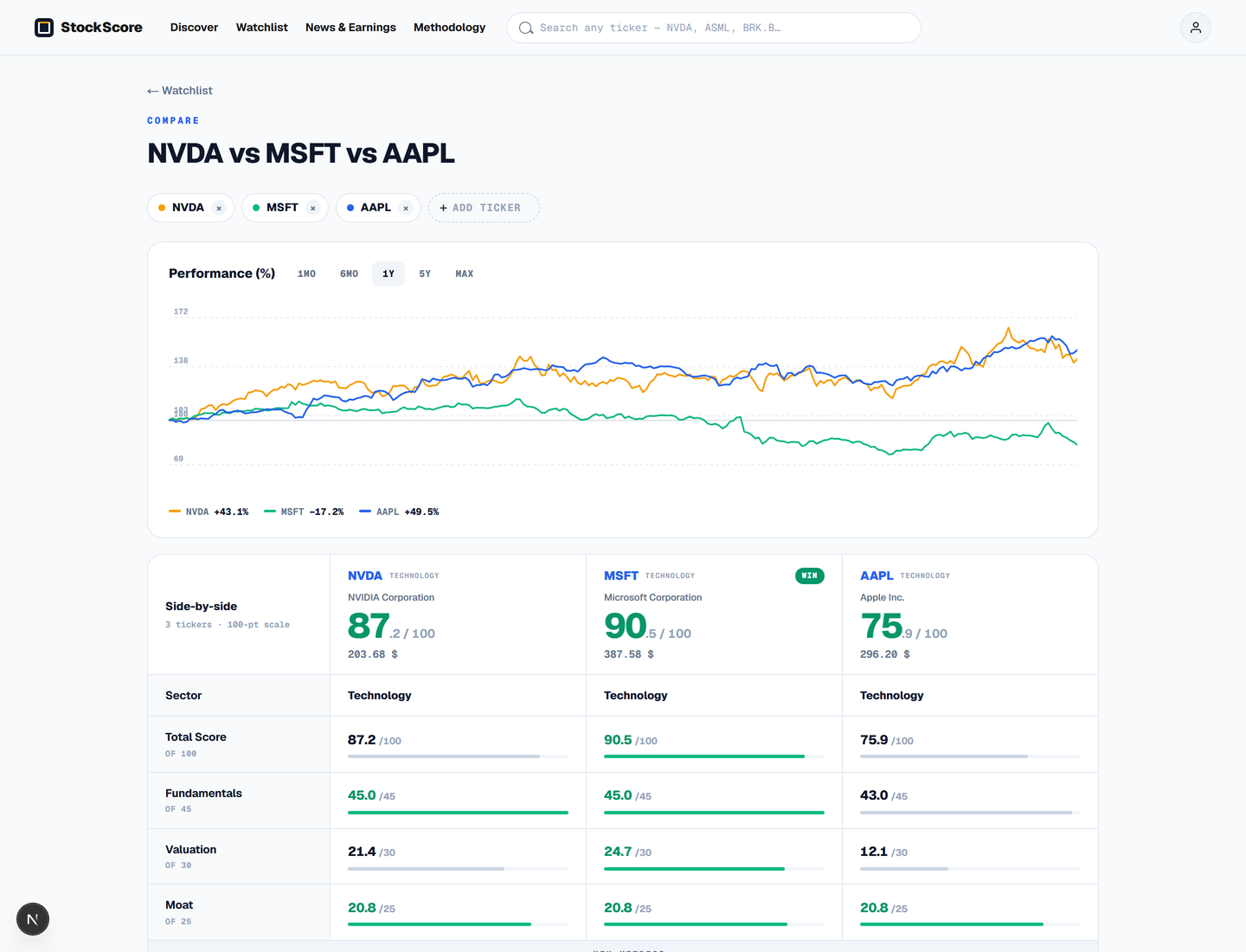
A score you can't inspect is just an opinion with a number on it. Every StockScore shows its working: the figures behind each pillar, and how complete the underlying data is.
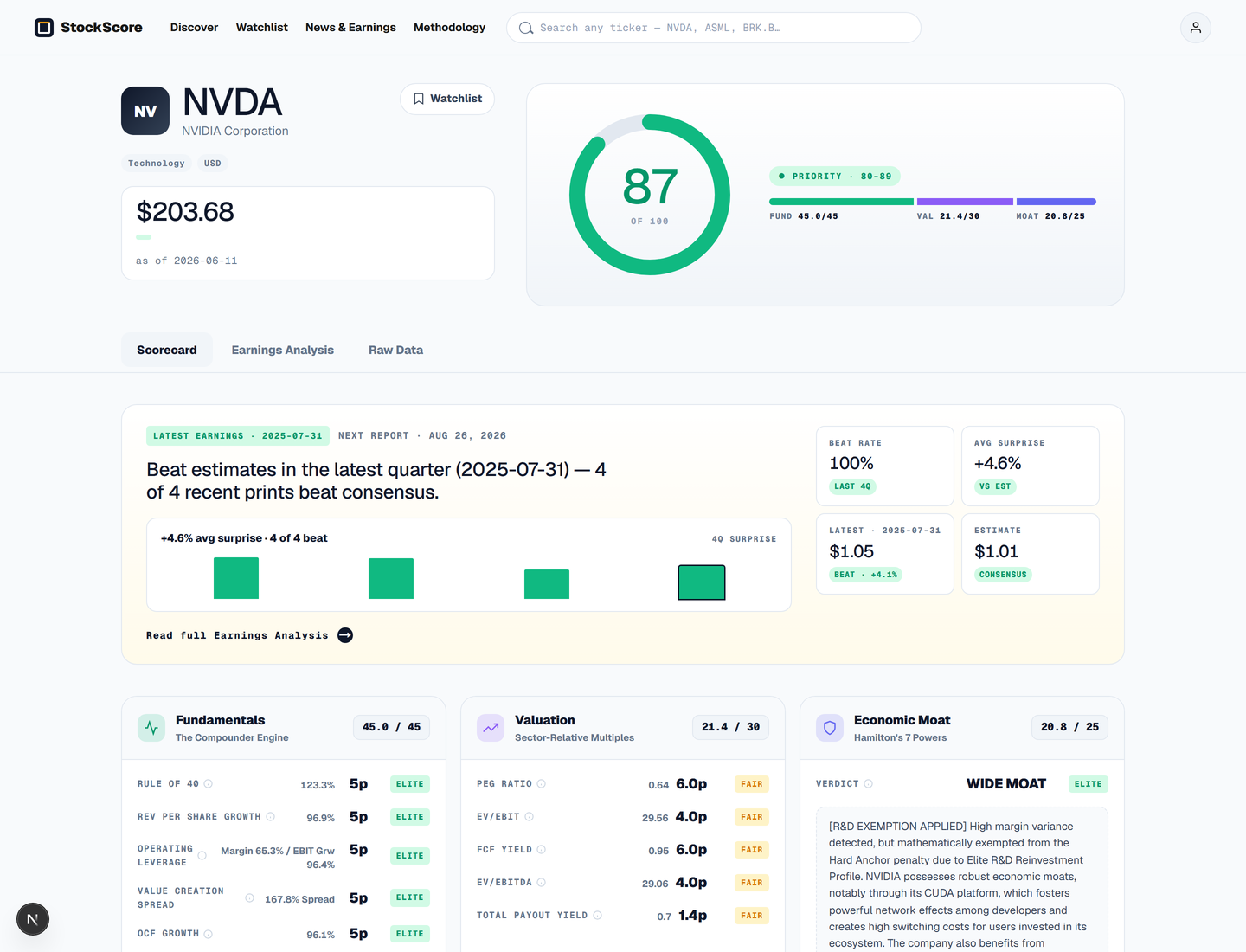
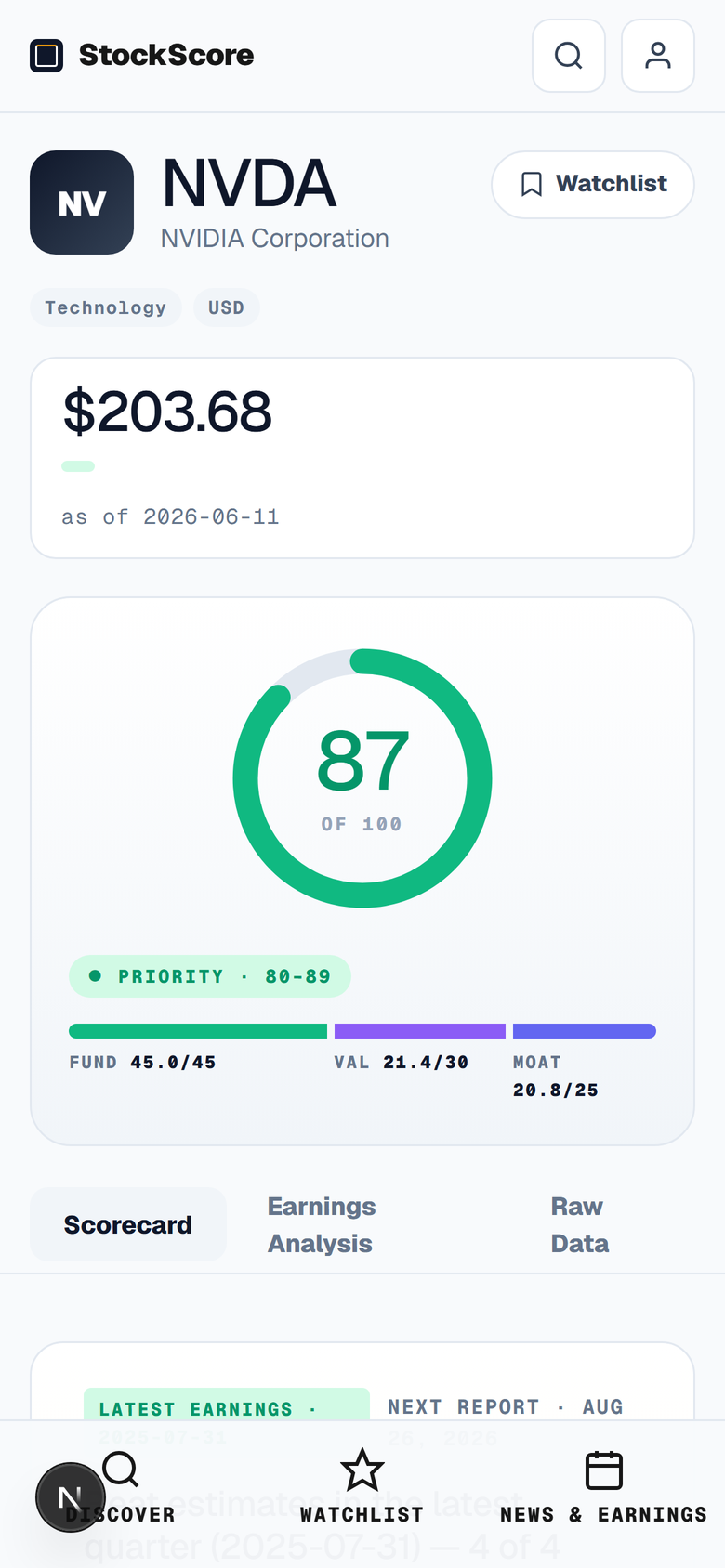
Nine checks on growth, margins, balance sheet, and how well cash is reinvested.
Is it cheap or expensive next to other companies in the same sector?
How durable is the advantage? The one pillar an AI model helps grade; code scores everything else.
Context, without a score
Three surfaces carry the context around the score: where the crowd leans, how a deal is pricing, what is known. They show direction on their own blue↔violet axis and never a 0 to 100 figure, so nobody mistakes them for the score.
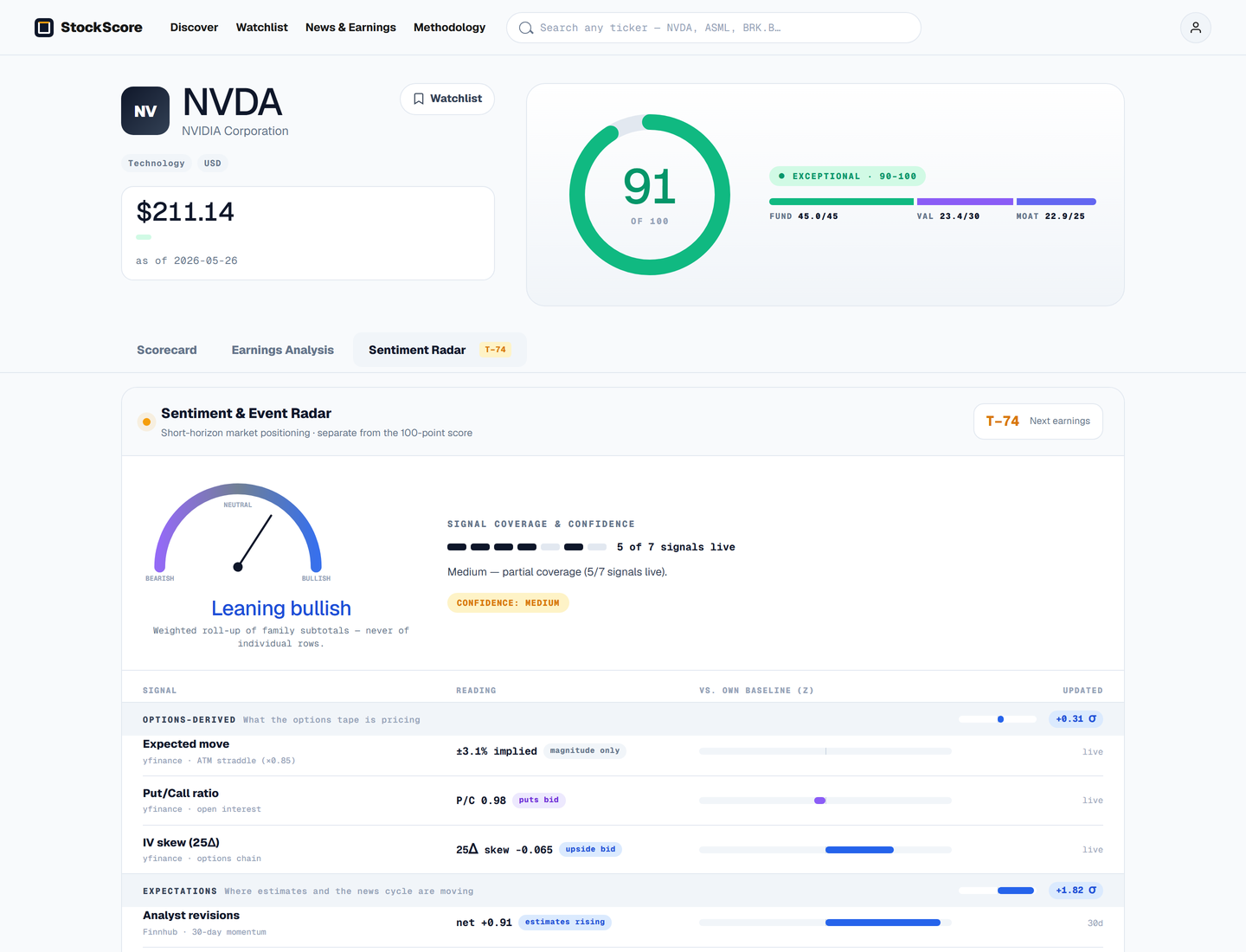
Seven signals across options, expectations and prediction markets, summed into a direction and a confidence. The same verdict rides beside each holding in your watchlist.
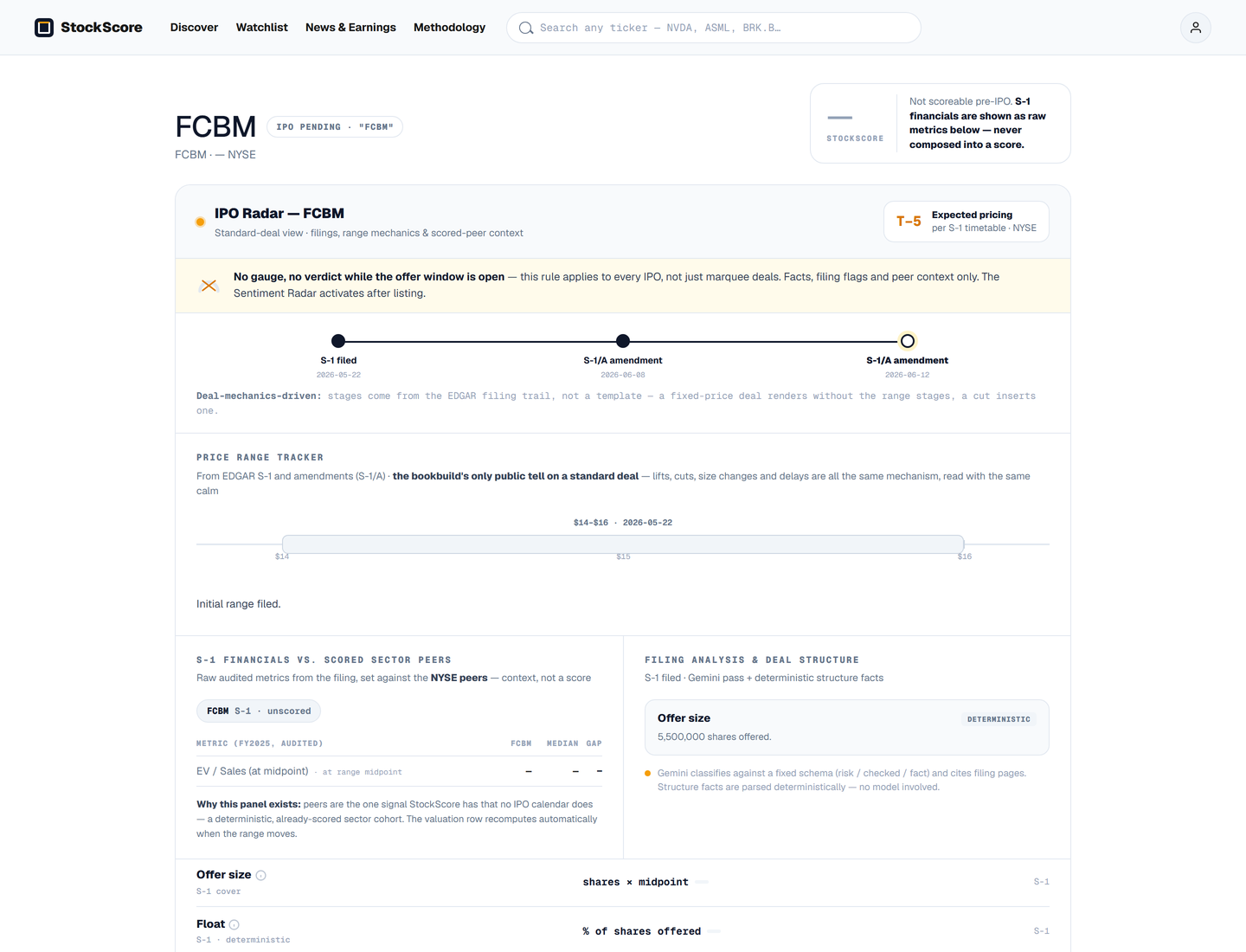
A deal, before there's a quarter to score: range moves, S-1 structure facts from EDGAR, and the lifecycle to listing.
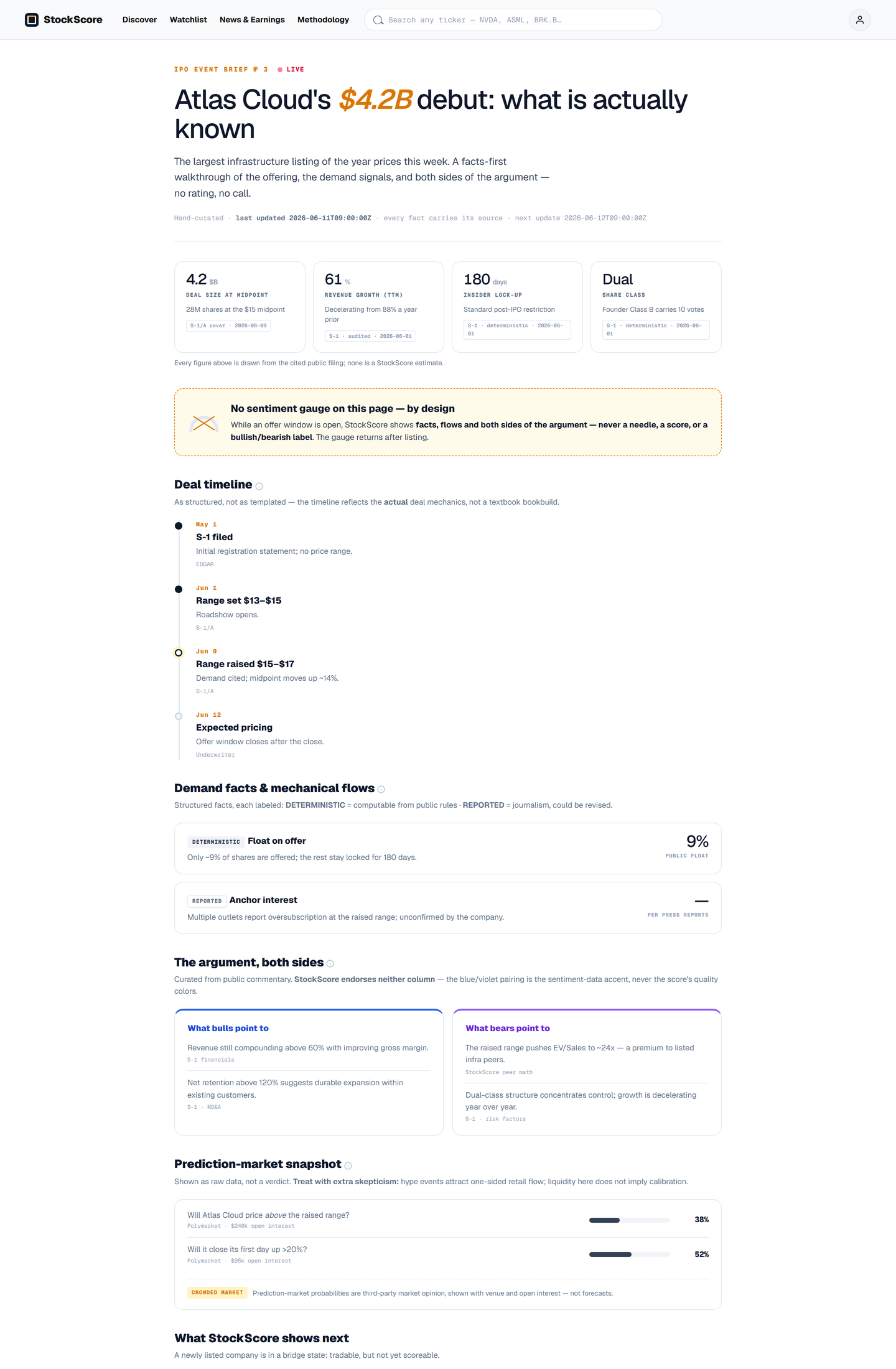
A sourced read on one big event, with bull and bear laid out side by side.
One request flow, four destinations
A Next.js client talks to FastAPI through a proxy that owns timeouts and strips auth. FastAPI dispatches by route: one path scores, three add score-free context. The same two-tier cache and bounded AI layer serve every route.
The 100-pt score engine, the one path that scores.
The seven-signal sentiment engine.
Deal pipeline, fed from SEC EDGAR.
Curated CMS and feed.
Data comes from many sources (yfinance first, Alpha Vantage and Finnhub as fallbacks, justETF for funds, Polymarket and EDGAR for the surfaces), resolved to one record and cached in two layers: a hot in-process cache over Cloud SQL Postgres as the 90-day source of truth. Every source fails open.